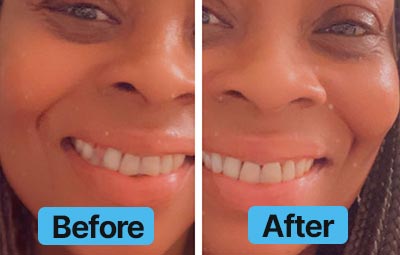
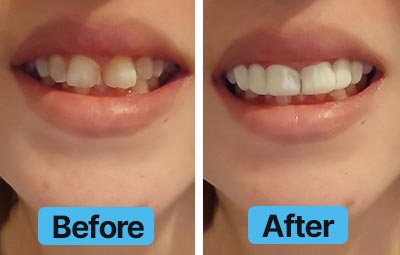
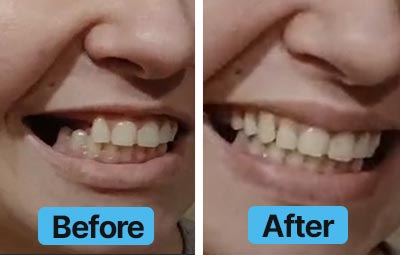
Summary
- Removable veneers snap over your natural teeth to cover stains, minor chips, and small gaps, with no drilling and no permanent changes.
- Snap-on, clip-on, and pop-on veneers are all the same thing. The label is marketing, not a real difference.
- The choice that actually matters is custom (made from an impression of your teeth) versus a one-size, off-the-shelf tray.
- Removable veneers are a cosmetic cover, not dental treatment. They do not fix cavities, gum disease, bite problems, or replace the function of missing teeth.
- Cost ranges widely: cheap OTC kits run $30 to a few hundred dollars, custom snap-on sets are a few hundred, and permanent porcelain runs $900 to $2,500 per tooth [4].
- They last up to 2 years with care, need daily cleaning, and are not meant for 24/7 wear.
A better smile without the drill
You want a brighter, more even smile, but you are not sold on grinding down your teeth or spending thousands at the dentist. That is exactly the gap removable veneers fill. They snap over your existing teeth like a thin cosmetic cover, no shots, no enamel removal, no commitment.
Here’s the thing most articles muddle: the names. Removable veneers, clip on veneers, snap-on veneers, and pop-on veneers all describe the same category of product. Once you know that, the real decision gets a lot simpler, and this guide walks you through it: the types, what they cost, who they fit, and the one factor that separates a set you will actually wear from one you will toss in a drawer.
Want custom, not one-size?
BellaVeneers are custom-made from an impression of your own teeth — no dentist visit. FDA-approved, BPA-free, four shades, 60-day warranty. From $349 per arch.
What are removable veneers?
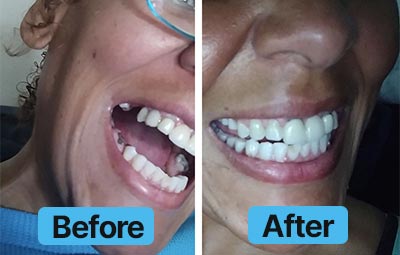
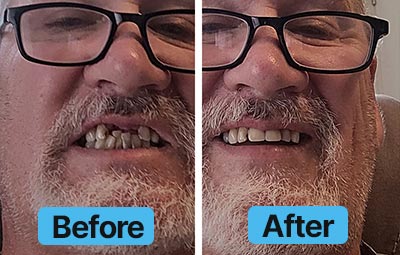
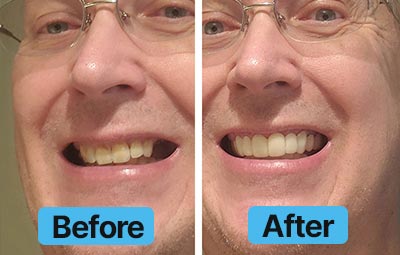
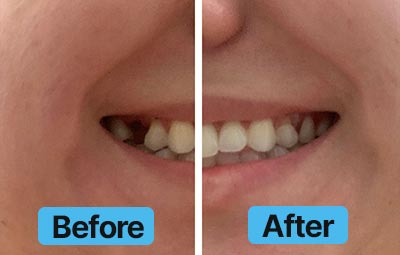
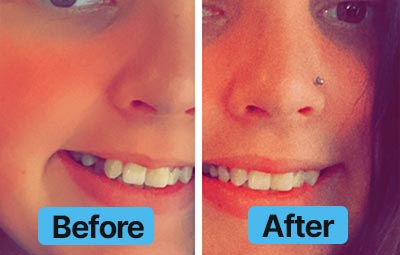
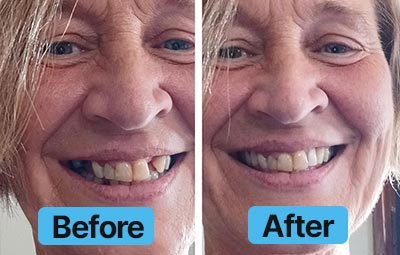
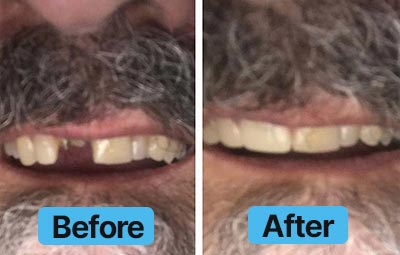
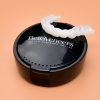
Removable veneers are thin, tooth-colored shells that fit over your front teeth and clip on and off like a retainer [1]. They are color-matched to your smile and usually made from a durable resin or copolyester. Because nothing is bonded or filed down, putting them in and taking them out takes seconds, and your natural teeth are untouched.
They are built to cover cosmetic issues in the smile zone: surface stains, minor chips, small gaps, and slightly crooked teeth. They are not built to do anything underneath that, which is the part that matters most for your health.
The veneer types, side by side
When people say veneers, they could mean any of four different things. Here is how clip on veneers compare to the permanent options.
| Type | Reversible? | Dentist visit? | Lasts | Typical cost |
|---|---|---|---|---|
| Porcelain | No, enamel removed | Yes, multiple | 10 to 20 years | $900 to $2,500 per tooth [4] |
| Composite | No | Yes | 5 to 7 years | $250 to $1,500 per tooth [4] |
| No-prep (bonded) | No | Yes | Many years | High |
| Removable / snap-on | Yes, anytime | No | Up to 2 years | ~$30 OTC to a few hundred custom |
The short version: porcelain looks the most natural and lasts the longest, but it is expensive and permanently alters your teeth. Composite is cheaper and faster but wears sooner. Removable veneers are the only reversible, no-dentist option, which is why they have become the popular entry point [2].
The choice that actually matters: custom vs off-the-shelf
Here’s what most best-veneers lists skip. Among removable veneers, the brand name on the box matters far less than how the veneers are made.
Off-the-shelf: mass-produced, one-size trays you buy online for very little. They cost the least, but the fit is bulky, the look is less natural, and they wear out fast [2]. A poor fit is not just a comfort issue either. Edges that rub can irritate your gums [3].
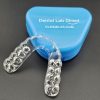
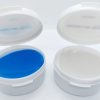
Custom: made from an impression of your own teeth, so they actually match your bite and your smile. They cost more than the bargain trays, but they fit better, look more natural, and last longer. This is the category BellaVeneers sits in: you take an impression at home, mail it back, and get a set built for your mouth.
So when you compare options, do not ask which brand. Ask whether they are made for your teeth, or for everyone’s.
Who removable veneers are (and aren’t) for
Removable veneers are a great fit if you have generally healthy teeth and gums and want to cover minor cosmetic flaws: light staining, a small chip, a slight gap [1].
They are the wrong tool, and can make things worse, in a few cases. Skip removable veneers, and see a dentist first, if you have:
- Cavities or gum disease: a veneer covers the problem and lets it grow underneath. Treat it first [1].
- Bruxism (night grinding): grinding forces can damage the veneer and your teeth, so heavy grinders are poor candidates.
- Significant misalignment or bite problems: covering crooked teeth does not fix the bite, and a poor fit can add jaw strain [3].
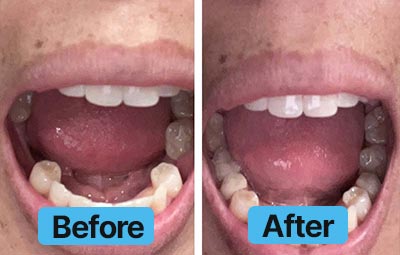
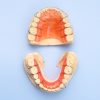
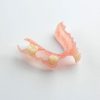
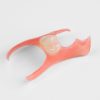
- Missing teeth you need to chew with: a veneer can mask a gap cosmetically, but it does not restore chewing function. For that, a partial denture is the real solution.
Plainly: removable veneers are a cosmetic cover, not a treatment. If something hurts, bleeds, or feels off when you wear them, stop and get it checked [1].
What removable veneers cost
Price tracks quality and customization. Bargain OTC kits start around $30, customizable pop-on sets run roughly $100 to $600, and custom snap-on veneers made from your impression land in the few-hundred range. Compare that to permanent veneers at $900 to $2,500 per tooth for porcelain, which adds up fast across a full smile [4]. One more thing to plan for: veneers are cosmetic, so dental insurance almost never covers them.
Living with removable veneers: eating, cleaning, and lifespan
Treat them a bit like a retainer. Brush them daily with a soft brush and a non-abrasive cleanser to keep stains and bacteria off. Take them out to sleep rather than wearing them around the clock. Go easy on hard, sticky, and very hot foods, which can dislodge or warp them, and check the maker’s guidance on eating. With that care, a quality set lasts up to 2 years before you reorder.
What to do next, based on your situation
- If you want to cover minor stains or a small gap on a budget: removable veneers are a strong, low-risk place to start.
- If you have an event in a few weeks: a custom snap-on set can be ready fast, far quicker than permanent veneers.
- If you want a permanent, decades-long result: porcelain is the better fit, and that is a dentist procedure, not something we offer. Be honest with yourself about cost and the fact that it is irreversible.
- If you have decay, gum disease, or grind your teeth: see a dentist first. Veneers over an untreated problem make it worse.
- If you are missing teeth and want to chew with them again: look at a partial denture, which restores function. A veneer only covers the gap.
FAQ
- Are veneers removable?
Some are. Removable veneers (snap-on, clip-on, or pop-on) clip over your teeth and come out anytime. Porcelain and composite veneers are bonded on permanently and cannot be removed at home [1].
- What’s the difference between snap-on, clip-on, and pop-on veneers?
Nothing meaningful. They are different names for the same removable cosmetic cover. What actually differs is whether they are custom-made from your impression or a one-size OTC tray.
- Can you eat with removable veneers?
Lightly, yes, but avoid hard, sticky, and very hot foods, which can dislodge or damage them. Many people take them out for big meals. Check your maker’s guidance.
- How much do snap-on veneers cost?
Cheap OTC kits start around $30, and custom snap-on sets run a few hundred dollars, versus $900 to $2,500 per tooth for porcelain [4].
- Do clip on veneers damage your teeth or gums?
Well-fitting ones worn as directed should not. Poorly fitting OTC veneers can rub and irritate gums over time, which is a strong argument for a custom fit [3].
- Can removable veneers replace missing teeth?
They can cosmetically cover a small gap, but they do not restore chewing function. For missing teeth, a partial denture is the right option.
- How long do removable veneers last?
Up to 2 years with proper care, then you reorder. Daily cleaning and gentle eating extend their life.
The smile upgrade you can actually reverse
Removable veneers are the low-commitment way to test a brighter smile: no drilling, no dentist chair, and no four-figure bill. Just remember what they are, a cosmetic cover for minor flaws, and what they are not, a fix for real dental problems. Get those straight, choose custom over one-size, and you will know exactly what you are buying.
Sources
- [1] Cleveland Clinic, Dental Veneers (types, candidacy, durability). my.clevelandclinic.org
- [2] Dentaly.org, Snap-On Veneers: Cost, Types, Pros and Cons. dentaly.org
- [3] User insights into removable snap-on veneers: perceptions and risks (PMC). pmc.ncbi.nlm.nih.gov
- [4] WebMD, Dental Veneers: porcelain and composite cost. webmd.com
Ready to Restore Your Smile?
Dental Lab Direct makes custom-made dental appliances the same way your dentist does — but ships direct from the lab, cutting out the overhead.
70% less than dentist prices. Custom fit. Ships to your door.
Full dentures from $497 · Partial dentures from $299 · Only four payments available