Summary
- Rinse and brush your night guard every morning. That two-minute habit prevents most of the smell and staining people complain about.
- Deep clean it weekly, not monthly. A weekly soak reaches buildup that a quick brush leaves behind.
- Safe deep-clean options: a cleaning tablet, diluted white vinegar, or hydrogen peroxide, for 10 to 30 minutes. Never soak longer than an hour, and never every day.
- A bad smell or a cloudy film is not just normal. It is bacteria or hard-water minerals, and both are fixable.
- Skip toothpaste, hot water, the dishwasher, alcohol, mouthwash, and bleach. Each one quietly shortens the guard’s life.
- A well-kept guard lasts a few years. Cracks, warping, or a smell that will not leave mean it is time to replace it, not clean it.
The two-minute habit that keeps your guard from getting gross
Here’s the catch with a night guard: the same appliance that protects your teeth all night sits warm and wet in your mouth for eight hours, which makes it a comfortable home for bacteria. Skip the cleaning and it can become the dirtiest thing you put in your mouth. Researchers who swab worn oral appliances regularly find bacterial and yeast buildup on guards that are not cleaned well [4].
Good news: knowing how to clean a night guard is mostly two simple habits and a short list of things you should never do. You do not need special gear. You need about two minutes a day and one soak a week.
The steps for how to clean a mouthguard, a sports gum shield, or a bite guard are the same, so if you wear more than one appliance, the same routine covers all of them.
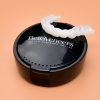
Cleaning made easy — one tablet, one glass of water.
Dental Lab Direct’s Denture and Retainer Cleaning Tablets work on night guards, mouthguards, and retainers. $14.99 for 30 tablets, or four payments of $3.75.
How often should you clean a night guard?
Daily: rinse and brush, every morning.
Weekly: one deep-clean soak.
More often: if it starts to smell, looks cloudy, or you grind hard enough to leave wear marks.
That weekly number matters, and it is the one place a lot of guides (ours included, in older posts) used to say monthly. Brushing handles the surface, but a soak is what reaches the film brushing misses, so once a week keeps the guard genuinely clean instead of just rinsed. It is a small change with a real payoff.
How to clean a night guard every day
A night guard, essentially a mouthguard you wear at night for grinding, only needs three steps each morning.
Rinse. The moment you take it out, rinse it under lukewarm (not hot) water to wash off saliva and loose debris before they dry on.
Brush. Brush all surfaces with a soft-bristle toothbrush and a little mild hand soap or dish soap. Skip the toothpaste. It feels right, but toothpaste is abrasive and scratches the surface, and those tiny grooves are exactly where bacteria settle in [1].
Dry. Let it air-dry fully on a clean, flat surface, about 15 to 30 minutes, before it goes back in the case. A guard stored damp grows bacteria. A guard stored dry does not.
How to deep clean a night guard (weekly)
Once a week, give it a soak. You have three solid options.
Cleaning tablets. Drop a denture-and-retainer cleaning tablet in a glass of warm water, add the guard, and soak for the time on the package, then rinse. The ADA notes that accepted denture-appliance cleansers reduce bacteria on removable appliances like night guards [2]. This is the easiest route, and the one we carry for exactly this job.
The natural method, vinegar and hydrogen peroxide. Soak the guard in distilled white vinegar for 30 minutes, rinse it, then soak in hydrogen peroxide for another 30 minutes and rinse again [3]. The vinegar lifts mineral buildup. The peroxide handles odor and bacteria.
The guardrail. Keep each soak to 30 minutes, never go past an hour total, and do not do the vinegar or peroxide soak daily. These are mild acids and oxidizers. Weekly, they clean. Daily, they slowly break down the plastic your guard is made of, and that shows up as a guard that warps or cracks early.
Here is how the methods stack up:
| Method | How | How often | Cost | The catch |
|---|---|---|---|---|
| Daily brush + soap | Rinse, soft-brush, air-dry | Every morning | About free | Does not reach deep buildup on its own |
| Cleaning tablet | Dissolve, soak 10 to 30 min, rinse | Weekly | About $15 / 30 ct | Follow the package time |
| Vinegar + peroxide | 30 min each, rinse between | Weekly | About free | Acidic, never daily, never over 1 hour |
| Ultrasonic cleaner | Water bath, run a cycle | Weekly | $30 to $60 device | Overkill for most people |
How to fix a night guard that smells or looks cloudy
These are the two problems people search for most, so here is the straight answer.
The smell. It is bacteria, full stop. Move to the weekly soak, dry the guard fully before storing it, and wash the case too. A clean, dry guard does not smell.
The cloudy or white film. That is usually hard-water minerals, not permanent staining. A 30-minute white-vinegar soak dissolves it. If the cloudiness will not clear after a good soak, the surface is wearing out, and that is a replacement signal, not a cleaning one.
What most cleaning guides skip: the plastic, not just your breath
Here’s what most cleaning guides miss. They tell you what kills bacteria, but not what each method does to the guard itself. As the lab that makes these guards, that is the part we pay attention to.
Your night guard is a precision piece of medical-grade thermoplastic, fitted to your teeth. Heat warps it. Abrasives scratch it. Strong chemicals and long soaks degrade it. So the best routine is not the most aggressive one. It is the one that gets the guard clean without shortening the life of a custom-fit appliance. That is why the weekly soak with a 30-minute cap beats a daily chemical bath, and why a soft brush beats toothpaste. Clean it right and a good guard lasts years. Clean it harshly and you will replace it long before you should.
What NOT to do
A few habits do real damage:
- Toothpaste: too abrasive, scratches the surface [1].
- Hot or boiling water and the dishwasher: heat warps the fit [1].
- Alcohol, mouthwash, or bleach: these dry out and degrade the material.
- Overnight or all-day soaking: more than an hour in any liquid weakens the plastic.
- Storing it damp in a closed case: that is how a guard grows the smell you are trying to avoid.
Don’t forget the case (and what it’s made of)
A spotless guard in a dirty case is back to square one. A grimy case harbors bacteria that transfer straight back onto the guard, so wash the case weekly with warm soapy water and let it dry fully [1]. You can even drop a cleaning tablet in with it.
The case design and material matter more than most people expect:
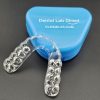
- Vented, not airtight. Choose a rigid plastic case with small air holes. The vents let the guard finish drying and let moisture escape. Airtight boxes and zip bags trap moisture, and a damp guard in a sealed case is how you get heavy bacterial growth and even black mold [1][3]. If your guard came in a sealed-feeling box, swap it for a vented one.
- Hard case over soft pouch. A rigid case protects the fit, since a crushed guard no longer seals to your teeth, and it is far easier to rinse out than a fabric pouch.
- Antimicrobial cases are a bonus, not a substitute. Some cases now use antimicrobial additives such as silver, zinc, or copper ions, which inhibit bacterial growth, with silver effective even against biofilms [6]. Useful, but the vents and the daily drying habit do more for cleanliness than any material claim.
- Replace the case when it cracks, stops closing, or will not come clean. Cases are cheap. Reinfecting a clean guard is not.
What to do next, based on your situation
Match your situation to the move.
- If it just smells: start the weekly soak and dry it fully before storing. The smell should be gone within a week.
- If it is cloudy or has white buildup: soak it in white vinegar for 30 minutes. If it stays cloudy, it is aging out.
- If it is cracked or warped: stop wearing it. Cleaning cannot fix a damaged guard, and a warped one no longer protects your teeth. Replace it.
- If you only grind once in a while: you may not need a custom guard at all. A drugstore boil-and-bite can be a fine stopgap for light, occasional grinding, and there is no reason to spend more than your situation calls for.
- If you grind nightly or protect dental work: a custom-fit guard is worth it, and the right type depends on how hard you grind. We make three, all from FDA-approved, BPA-free material:
If your guard is somewhere between still fine and ready for the trash, or your jaw pain or grinding feels severe or undiagnosed, that is worth a real conversation, with us about a replacement or with a dentist about the grinding itself. Reach out here and we will point you the right way, even if the answer is not a purchase.
FAQ
- Can I clean my night guard with toothpaste?
No. Toothpaste is abrasive and leaves micro-scratches where bacteria collect. Use mild soap and a soft brush instead [1].
- Can I soak it in mouthwash or alcohol?
Skip both. Alcohol-based liquids dry out and degrade the material over time. A cleaning tablet or a diluted vinegar or peroxide soak is safer.
- How do I get rid of the smell?
The smell is bacteria. Do a weekly soak, dry the guard completely before storing it, and wash the case. That clears it for almost everyone.
- Why is my night guard cloudy or turning white?
Usually hard-water mineral buildup. A 30-minute white-vinegar soak dissolves it. Cloudiness that will not clear means the guard is wearing out.
- Can I use denture or retainer tablets, and is cleaning a mouthguard any different?
Yes to tablets, they are made for this. And no, the steps for how to clean a mouthguard, retainer, or night guard are the same: rinse, brush, weekly soak, dry.
- How often should I replace my night guard?
With good care, a few years. Replace it sooner if you see cracks or warping, or if the fit changes or the smell will not go away.
- How do I clean my night guard naturally?
Use the natural soak: distilled white vinegar for 30 minutes, then hydrogen peroxide for another 30 minutes, rinsing in between, once a week. The vinegar lifts mineral buildup and the peroxide neutralizes odor, with no harsh chemicals needed. Keep each soak to 30 minutes and do not run it daily.
Keep it clean, keep it longer
Cleaning a night guard is not complicated once you know the rhythm. Rinse and brush it daily. Soak it weekly. Store it dry. Once you know how to clean a night guard, the routine takes about two minutes, and it keeps your guard fresh and protecting your teeth for years. When it is finally time for a new one, you can skip the dental-office markup and order a custom guard direct.
Sources
- [1] Cleveland Clinic, Mouthguards (reviewed by Karyn Kahn, DDS). my.clevelandclinic.org
- [2] American Dental Association, ADA Seal of Acceptance, denture and appliance cleansers. ada.org
- [3] Healthline, How to Clean a Mouthguard (medically reviewed). healthline.com
- [4] Surface properties and initial bacterial biofilm growth on 3D-printed oral appliances (PMC). pmc.ncbi.nlm.nih.gov
- [5] Impact of denture cleaning method and overnight storage on biofilm, randomized clinical trial (PMC). pmc.ncbi.nlm.nih.gov
- [6] Antimicrobial properties of nano-silver particles in orthodontic retainer composites (PMC). ncbi.nlm.nih.gov
Ready to Restore Your Smile?
Dental Lab Direct makes custom-made dental appliances the same way your dentist does — but ships direct from the lab, cutting out the overhead.
70% less than dentist prices. Custom fit. Ships to your door.
Full dentures from $497 · Partial dentures from $299 · Only four payments available