Summary
- Buying partial dentures online can save 50 to 70 percent vs in-person, but the savings only translate to a good outcome for the right kind of case. For straightforward replacements (stable mouth, clear impression, no complicating factors), online is often the right move. For complex cases, in-person is genuinely worth the markup.
- The ‘online vs in-person’ question is usually framed as a binary by content that benefits from one side winning. The honest framing is case-specific, with five criteria that determine which channel fits each reader’s situation.
- Not all online sellers are equivalent. The three tiers (DIY boil-and-bite, reputable US lab-direct, offshore unverified) have very different quality and risk profiles. Articles that lump them together are usually selling you something.
- ISO 20795-1 sets the international standard for denture base polymers regardless of where the device is fabricated. A partial denture meeting this spec lasts 5 to 8 years whether you bought it online or got it fitted in-office. Material grade matters more than channel for long-term outcomes.
- The ‘hidden costs’ argument against online dentures has truth in it for the DIY tier, but is mostly false for the reputable lab-direct tier. We’ll walk through where the argument applies and where it doesn’t.
- Honest carve-out: complex cases (multiple abutment teeth, severe periodontal disease, planned implants, known monomer allergies) often warrant in-person. We say so when that applies, and we say so when it doesn’t.
Why most ‘online vs in-person’ articles get this wrong
If you’ve been researching partial dentures, you’ve probably read both sides of this argument. Online sellers tell you it’s safe and saves you thousands. In-person clinics tell you it’s risky and causes permanent damage. Both can’t be right.
The reason both sides sound so confident is that most articles arguing for ‘online’ are written by online sellers, and most arguing for ‘in-person’ are written by in-person clinics. Whichever side publishes the article tends to win the conclusion.
This isn’t one of those articles.
We’re a US dental lab. We ship partial dentures directly to customers (the online lab-direct channel), and labs like ours supply dentist offices that fit dentures in-person. We see both sides every week. The honest answer is that whether to buy partial dentures online vs in-person is a case-specific decision. For some readers, lab-direct is clearly right. For others, in-person clearly is. The article below shows you which side fits your situation, with criteria you can apply yourself.
Here’s the comparison, broken down.
When buying in-person IS the right move
Let’s start with the cases where the in-person channel is genuinely better. These are real and worth taking seriously.
You’re a good fit for in-person if:
- Your case is complex (multiple missing teeth across both arches, abutment teeth that need pre-treatment, planned implant work, bite reconstruction)
- You have severe periodontal disease that affects your remaining teeth
- You have a known acrylic or monomer allergy and need material screening before fabrication
- You’re a first-time denture wearer with anxiety about the process, and you want hands-on guidance from a clinician
- You want multiple in-office adjustment visits included in the price
- Your insurance significantly subsidizes in-office work in a way that flips the cost math against the lab-direct discount
If two or more of those describe your situation, in-person is genuinely worth the markup. The dentist’s clinical time and diagnostic judgment is the value, not the device itself. A complex case run through a generic at-home impression kit can produce a denture that fits poorly because the underlying treatment plan needed more than impression accuracy.
This is the honest carve-out. We won’t pretend the lab-direct channel is universal. It isn’t.
When buying partial dentures online IS the right move
Now the cases where the lab-direct online channel is the right call.
You’re a good fit to buy partial dentures online if:
- Your mouth is stable (no active periodontal disease, no planned extractions, abutment teeth in good condition)
- The case is straightforward (replacing 1 to 3 teeth in a known location, no bite reconstruction needed)
- You’ve worn dentures before and know what to expect during adjustment
- You’re price-conscious and want fabrication quality without the office overhead built into in-person pricing
- You’re in a geography without easy access to a denturist (rural, traveling, frequently relocating)
If three or more of those describe you, the lab-direct online route is often a 50 to 70 percent cost saving for the same fabricated device, without compromising quality. A straightforward partial denture replacement at a dentist office costs $1,500 to $4,000+ because the office layer adds chair time, rent, staff, and the dentist’s diagnostic time on top of the lab cost. For your case, the device that ships out of the lab is materially the same as what you’d get in-office.
This is where the lab-direct DTC channel earns its place.
How to tell which side you’re on (the 5-criteria self-check)
If the two sections above didn’t make the answer obvious, run yourself through this short self-check.
1. Case complexity: Simple (1 to 3 teeth, stable mouth)? Score one for online. Complex (multi-tooth, periodontal, bite reconstruction)? Score one for in-person.
2. Prior denture experience: Experienced wearer who knows the adaptation period? Score one for online. First-time wearer with anxiety or uncertainty? Score one for in-person.
3. Geographic access: Rural or limited access to a qualified denturist? Score one for online. Convenient access to a quality denturist you trust? Score one for in-person if you’d otherwise visit them.
4. Budget sensitivity: Paying out of pocket and price matters? Score one for online. Insurance covers in-office work at 60+ percent of major services and you’ll meet the deductible? Score one for in-person, the math may flip.
5. Comfort with self-impression: Comfortable following written instructions and submitting a photo for pre-fabrication review? Score one for online. Need hands-on guidance and worried about getting impressions right alone? Score one for in-person.
Three or more ‘online’ answers? The lab-direct DTC tier is your best fit.
Three or more ‘in-person’ answers? Visit a denturist.
Mixed (2-3 each)? Keep reading. The next sections cover what makes the lab-direct tier different from other online options, and the section after that breaks down the ‘hidden costs’ argument honestly.
Three tiers of online sellers (not all are the same)
This is the part most ‘online vs in-person’ articles skip. When critics warn against buying partial dentures online, they’re usually treating ‘online’ as one category. It isn’t. There are at least three distinct tiers, and the quality, risk, and outcomes vary dramatically.
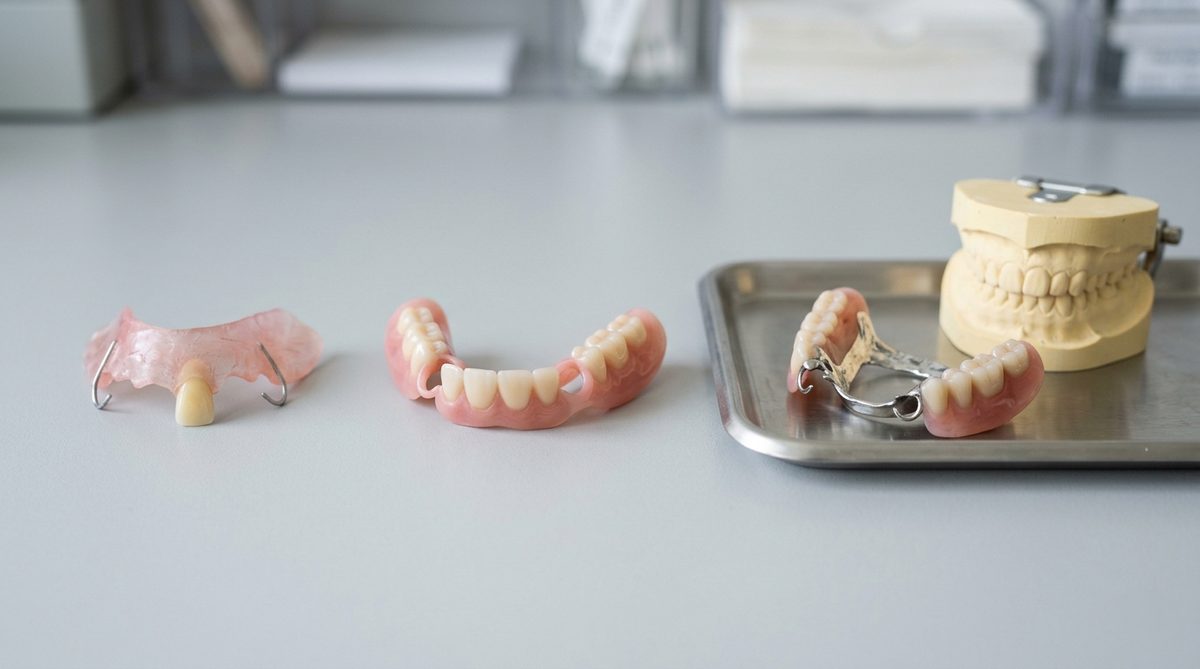
Tier 1: DIY / boil-and-bite kits ($50 to $200)
Lower-grade thermoplastic, no custom impression, generic pre-formed flippers or boil-and-bite trays. Lasts 6 to 18 months. Best fit: short-term placeholder while you save for a real denture, or as a backup during travel. The ‘hidden costs’ criticism applies here most fairly. Fit is generic, materials are weaker, and downstream dental work to correct problems is a real risk if you wear one long-term.
Tier 2: Reputable US lab-direct ($299 to $900, us included)
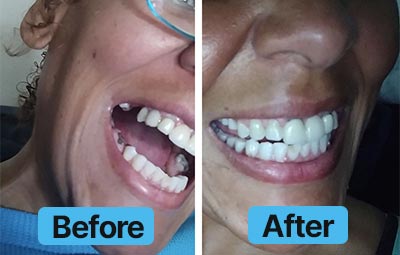
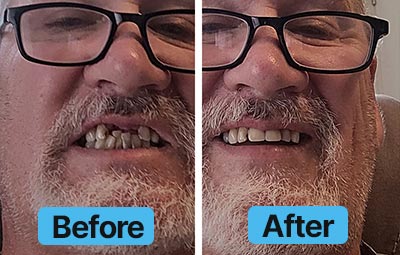
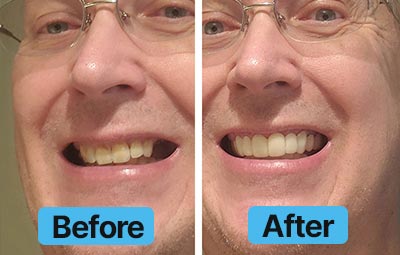
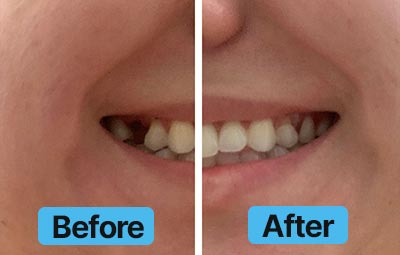
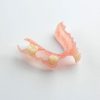
Custom impression from an at-home kit (custom-fit trays, pre-measured putty, prepaid USPS return label, photo review service before fabrication starts), lab-fabricated at a US dental lab from professional-grade FDA-approved materials, non-allergenic and BPA-free. 30-day adjustment warranty (free adjustment or remake if the device doesn’t fit on delivery) plus a 60-day warranty on breakage. 5 to 8 year lifespan, materially identical fabrication to what dentist offices order from labs like ours.
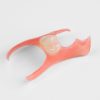
This is the tier where lab-direct earns its place. The fabrication quality matches in-office work because it IS in-office-quality work, minus the office overhead. Our runs $299 (Essix retainer) to $549 (flexible partial), with Klarna, Partial.ly, and Afterpay interest-free payment plans.
Tier 3: Offshore / unverified online ($100 to $500)
Often non-US labs, no FDA registration disclosure, no clear warranty structure, no impression review service. Quality is variable. Some land fine, some fail within months. The lifecycle math doesn’t favor this tier because the savings vs Tier 2 are small (a couple hundred dollars at most), and the risk premium is real.
When you read articles claiming ‘all online partial dentures cause permanent damage,’ they’re usually pointing at Tier 1 or Tier 3 problems and pretending Tier 2 doesn’t exist. Most lab-direct customers we serve buy Tier 2 specifically because the quality is identical to what their dentist would order from a lab like ours.
The ‘hidden costs’ argument, examined honestly
Some articles claim buying partial dentures online creates $5,000+ in hidden costs from jaw damage, accelerated tooth loss, and emergency dental work. The argument deserves an honest reply rather than dismissal.
True for Tier 1 (DIY) and Tier 3 (offshore): ill-fitting devices, lower-grade materials, no real warranty, no fit recourse. The downstream cost chain (extractions, gum treatment, replacement dentures, emergency visits) is real if you wear a poorly-fitting device long-term. The fear-based articles are pointing at real risks at these tiers.
Mostly false for Tier 2 (reputable lab-direct): the custom-impression process delivers fit quality comparable to dentist-fitted because it’s the same lab process. Professional-grade FDA-approved materials match what dentist offices receive from their labs. The pre-fabrication photo review service (we offer this, and reputable competitors do too) catches impression problems before fabrication starts, which closes most of the fit-risk gap. Fit warranties cover delivery-stage issues.
On the ‘permanent jaw damage’ claim: the underlying biology is real. Ill-fitting dentures of any kind can cause bone resorption over years. But the cause is fit quality, not channel. An ill-fitting in-office partial causes the same damage. The argument is fundamentally about fit, not online vs in-person.
Net read: if you buy partial dentures online at Tier 2 from a reputable seller with a real fit warranty, the ‘hidden cost’ concern reduces to the same fit-quality risk every denture wearer faces, regardless of where they bought. If you buy at Tier 1 or Tier 3, the argument applies and you should think twice.
Three tiers, side by side
Browse our for per-product detail.
What to do next, based on your situation
Five common situations. Pick the one that fits you.
- You scored 3+ ‘online’ answers and want to move forward. Order from a Tier 2 seller, US FDA-registered lab, ISO 20795-1 materials, real fit warranty. Our lineup starts at $299 with the
. For most readers in this category, the at $549 is the best balance of comfort, durability, and aesthetics.
- You scored 3+ ‘in-person’ answers. Visit a denturist or prosthodontist in your area. The clinical time and adjustment visits are worth the markup for your case. Don’t optimize for sticker price on a case where the office services do real work.
- You scored mixed (2-3 each). This is the gray zone where the choice is closer. Call us at 1-888-591-2220. We’ll help you figure out which tier actually fits without trying to sell you something inappropriate. Sometimes the answer we give is ‘visit a denturist, this isn’t a fit for us.’
- You’ve been considering a Tier 1 DIY boil-and-bite kit to save money. Don’t, except as a temporary placeholder. The Tier 2 lab-direct option starting at $299 is the lowest reasonable cost floor that still delivers the fabrication quality you need for daily wear over 5+ years.
- You’ve been quoted $3,000+ at a single dentist office for what sounds like a simple case. Get a second quote and compare to Tier 2 lab-direct pricing. If your case is straightforward, you’re paying for office overhead. If it’s complex per the self-check above, the markup is justified.
Still mapping your situation to one of these five?
If your case sits between scenarios after the self-check, our team can walk through it with you on a call. We’re a US dental lab that ships nationally, so we have an obvious bias toward selling you a partial denture, but we’ve made enough complex cases over 25 years to recognize when in-person is the better path. Sometimes we’ll tell you to visit a denturist instead. Reach us at 1-888-591-2220 or via the .
FAQ
- Is buying partial dentures online safe?
It depends on which tier you buy from. Tier 2 lab-direct sellers (US FDA-registered, ISO 20795-1 materials, real fit warranty) deliver the same fabricated device a dentist office would order from a similar lab. Tier 1 (DIY) and Tier 3 (offshore) have real safety concerns we covered above. Most ‘is buying partial dentures online safe’ questions are really asking about Tier 2 specifically.
- Do online partial dentures fit as well as in-person ones?
When ordered from Tier 2 with a custom-impression kit and photo review service, yes. Fit is comparable to a dentist-fitted partial because the same lab process applies. Tier 1 and Tier 3 fit is variable. The fit quality gap isn’t between online and in-person broadly; it’s between custom-impression-with-photo-review (Tier 2 + in-person) and everything else (Tier 1 + Tier 3).
- Why are partial dentures online cheaper than dentist-office prices?
Office overhead. The lab that fabricates the device is often the same across channels. The dentist office adds chair time, clinical staff, rent, equipment, and management on top of the lab cost. Lab-direct sellers skip those layers. For straightforward cases, the overhead doesn’t add value to the device itself. For complex cases, it does.
- Can I get insurance to cover partial dentures bought online?
Some plans reimburse out-of-network lab-direct purchases at major-services percentages (typically 40 to 60 percent after deductible) [2]. We don’t bill insurance directly, but HSA and FSA funds typically apply at checkout, and we can provide documentation that supports your reimbursement claim. If insurance is a major factor in your decision, get a written estimate from your plan before ordering.
- What happens if I buy partial dentures online and they don’t fit on delivery?
From us: our 30-day adjustment warranty covers free adjustment or remake if the device doesn’t fit. From other reputable Tier 2 sellers: similar policies typically apply. From Tier 1 or Tier 3: variable, sometimes nothing.
- My new partial denture feels weird in the first week. Is something wrong?
Probably not. The first 1 to 2 weeks with any new partial denture, online or in-person, feel awkward. Your mouth needs time to adapt to a new piece of material against your gums and against your existing teeth. Normal Days 1 to 14 signs: mild soreness that moves around (not stuck in one spot), increased saliva production, slight speech adjustment, mild gag sensation if it’s a larger partial. These usually fade by Day 14. What’s NOT normal during adaptation and indicates a real fit problem: persistent rocking when you push on one side, sore spots in the exact same location every day after Day 14, food packing under the same area at every meal, audible clicking that doesn’t go away with practice. If you see the normal signs, give it the full two weeks. If you see the not-normal signs, contact your seller for an adjustment or remake. From us, that’s covered by the 30-day adjustment warranty.
- How long do partial dentures from an online seller last?
Tier 2 lab-direct partials last 5 to 8 years if cared for. Tier 1 boil-and-bite lasts 6 to 18 months. Tier 3 offshore varies wildly. Lifespan correlates with material grade and fabrication standard, not channel, when the lab actually meets the standard. A Tier 2 partial denture and a dentist-fitted partial from the same lab have effectively the same lifespan.
25+ years as a . Professional-grade FDA-approved materials, non-allergenic and BPA-free. Custom-made at our US dental lab. Made in coordination with licensed dentists. 1,000+ verified reviews. 60-day warranty on all custom-made products.
If lab-direct is the right tier for you
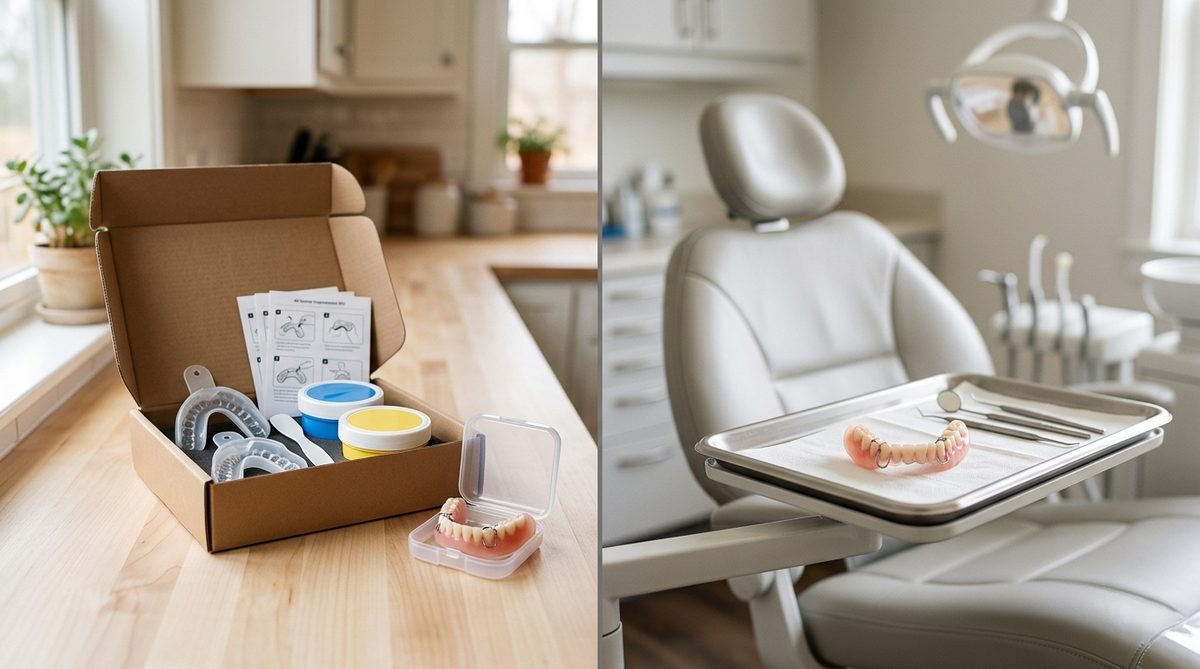
Order online. Your at-home impression kit ships in days with custom-fit trays, pre-measured putty, step-by-step instructions, and a prepaid USPS return label. Submit a photo of your impressions for free review before you send them back. The custom partial denture is then crafted at our US dental lab over 3 to 4 weeks. Every order includes a 30-day adjustment warranty (free adjustment or remake if the device doesn’t fit on delivery) and a 60-day warranty on breakage.
Real lab. Real fit. Real warranty.
Sources
[1] ISO 20795-1:2013. Dentistry, Base polymers, Part 1: Denture base polymers. International standard specifying mechanical, biological, and processing requirements for PMMA denture base materials.
[2] National Association of Dental Plans (NADP). Dental benefits coverage data including typical coverage percentages, annual maximums, and waiting periods for major services.
[3] American Dental Association. Clinical assessment criteria for removable prosthodontics. Covers finish, porosity, tissue surface, polish, and occlusal quality as quality indicators.
[4] FDA Product Classification Database. Product Code EBO: Denture, Partial, Removable. Class II medical device.
[5] National Association of Dental Laboratories. Certified Dental Laboratory (CDL) program. Voluntary lab certification covering quality systems, materials traceability, and regulatory compliance.