Summary
- Partial dentures cost between $300 and $5,000+ per arch depending on material, case complexity, and where you buy. Most people pay $800 to $2,500 through a dentist office. Lab-direct sellers like us start at $299, below the bottom of the typical range, because we cut the office overhead.
- Three things drive the price: material grade (acrylic, flexible nylon, or cast cobalt-chromium), case complexity (number of teeth, location, arch), and channel (DIY, lab-direct, dentist-fitted). The lab that fabricates the device is often the same across channels.
- At a dentist office, $800 to $2,500 pays for the device plus chair time, the dentist’s diagnostic time, multiple adjustment visits, and office overhead. For complex cases, those services add real value. For straightforward cases, that overhead is the gap between what your device costs and what the office charges.
- Insurance typically covers 40 to 60 percent of major services like partial dentures after deductible, with annual maximums of $1,000 to $2,000. Many plans have 6 to 12 month waiting periods on major services.
- ISO 20795-1 sets the international standard for denture base polymers. A partial that meets this spec lasts 5 to 8 years; cheaper devices that miss the spec often fail within 12 months. Material grade matters more than channel for long-term cost-per-year math.
- Honest carve-out: complex cases (severe periodontal disease, multiple abutment teeth, planned implant work, monomer allergies) often warrant the dentist-fitted price because the clinical time is the value. For straightforward cases, lab-direct delivers the same fabrication for a fraction of the price.
What partial dentures actually cost (cutting through the explainers)
You’re researching partial dentures. The price quoted at a dentist office and the price quoted online can differ by thousands of dollars for what looks like the same device. The question almost every shopper asks first: why?
Most cost articles give you a price range and stop there. We’re going to show you where the money actually goes (material, lab labor, lab overhead, channel margin) so the range makes sense. Then we’ll walk through what you actually pay for at $800 to $2,500, what’s useful at that price tier, and what’s overhead that doesn’t make the device any better.
We’re a US dental lab. We’ve been making partial dentures for 25+ years. The cost math below is from the inside.
Here’s the cost question, broken down.
How much do partial dentures cost?
The short answer: partial dentures cost $300 to $5,000+ per arch. Most people pay $800 to $2,500 through a dentist office [1]. Lab-direct sellers like us start at $299.
National averages from the ADA’s 2022 Survey of Dental Fees: a resin (acrylic) partial averages $1,738. A cast metal partial averages $2,229 [1]. Flexible nylon (Valplast, Duraflex) partials sit between the two. The exact price depends on material, case complexity, and where you buy.
Three things drive the price
Driver 1: Material grade
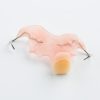
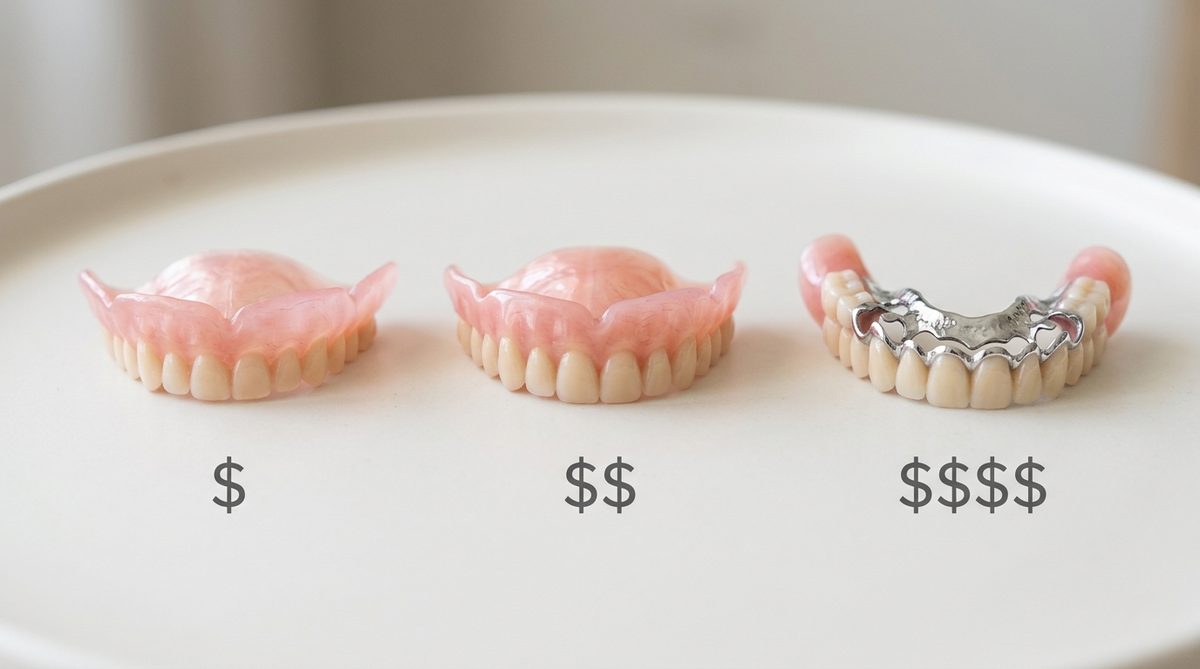
Heat-cured PMMA acrylic. The lowest-cost lab material. Higher density, lower residual monomer than self-cured acrylic, longer service life. National average price $1,738 at a dentist office. Our starts at $449. Acrylic partials use metal clasps to retain the device. Best fit for budget-conscious cases without metal-allergy concerns.
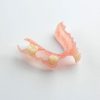
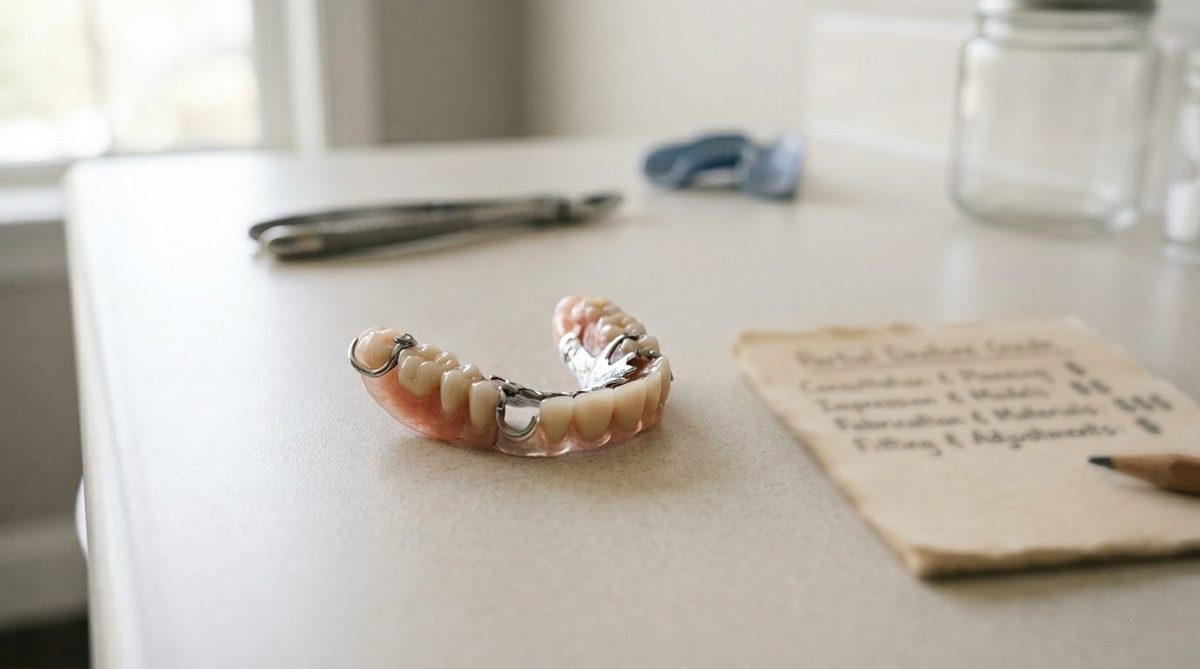
Flexible nylon thermoplastic (Valplast, Duraflex, TCS). Mid-range pricing, metal-free, hypoallergenic, gum-toned. No visible clasps. More comfortable for most wearers than acrylic. Our starts at $549. Best fit for aesthetic priority, metal allergies, or front-teeth replacement.
Cast cobalt-chromium framework. The highest-end lab-fabricated option. Thinnest profile, 10+ year lifespan, supports complex multi-tooth replacements. National average $2,229 at a dentist office. Best fit for complex multi-tooth cases or long-term durability priority.
Driver 2: Case complexity
Number of teeth replaced. A single-tooth flipper or (starts at $399) costs less than a 4-tooth bilateral partial.
Location (front vs back). Front-teeth partials need more aesthetic work: shade matching, contouring, gum-tone blending. The same material can cost more for front-teeth cases.
Arch (upper vs lower). Upper partials gain retention from the palate. Lower partials sometimes need more clasp engineering to stay seated.
Existing teeth condition. Abutment teeth (the natural teeth supporting the partial) sometimes need cleanings, fillings, or crowns before a partial can fit properly. That dental work is billed separately and is one of the biggest costs people don’t anticipate when getting a partial at a dentist office.
Driver 3: Where you buy (the channel)
DIY / no-impression online ($50 to $200). Boil-and-bite kits or pre-formed flippers. Not custom-fit. Lower-grade thermoplastic. Lasts 6 to 18 months. Best fit for short-term placeholder only.
Lab-direct DTC ($299 to $900 typical, including our entire range). Custom impression from an at-home kit, lab-fabricated from professional-grade materials, shipped direct. No office overhead. Best fit for stable mouth, straightforward case.
Dentist-fitted custom ($1,500 to $4,000+). In-office impression, the dentist’s diagnostic time, multiple adjustment visits, insurance billing handled. Best fit for complex case, multiple abutments, periodontal concerns.
Where the money goes (the lab-side breakdown)
Here’s what most cost articles won’t say out loud.
The cost components
A partial denture’s retail price breaks down roughly like this. These are industry-typical ranges, not DLD-specific; the actual mix varies by seller.
Material cost: 5 to 15 percent of retail. The actual PMMA, nylon, or cobalt-chromium. A few dollars to a few tens of dollars of raw material per device.
Lab labor: 15 to 25 percent. Technician time. Impression review, model pouring, wax-up, processing, finishing, articulator-verified occlusion, and QC. A skilled lab technician at our facility might spend 2 to 4 hours per partial.
Lab overhead: 10 to 20 percent. Rent, equipment, FDA-registered facility infrastructure, materials inventory, shipping logistics.
Channel margin / office overhead: this is the variable. At a dentist office, 40 to 60 percent of retail goes to chair time, dentist time, hygienist support, office rent, practice management, and front desk staff. At a lab-direct seller, this drops to 5 to 15 percent because we skip almost all of that overhead layer.
So a $3,000 dentist-fitted partial and a $549 lab-direct partial can be the same lab-fabricated device. The difference is what the office layer adds.
What you actually pay for at $800 to $2,500
Most people pay $800 to $2,500 through a dentist office. Here’s what that price gets you, separated into things that add value to the device and things that don’t.
Useful things you pay for at the dentist office:
- The dentist’s diagnostic time, assessing whether your case is straightforward or complex
- An in-office impression with professional technique
- Multiple adjustment visits if the fit needs refinement
- Articulator-verified occlusion at the lab (this part is the same across channels)
- Coordination if your case needs related dental work (cleanings, extractions, crowns) first
- Insurance billing handled by office staff
- A single point of contact for follow-up issues
Things in that price that don’t make the device better:
- Office rent and equipment depreciation
- Front-desk and practice-management staff
- The marketing budget the office runs to acquire patients
- Profit margin layered on top of overhead
For a complex case (multiple missing teeth, periodontal issues, planned implants), the useful column above is genuinely worth what you pay. The dentist’s clinical judgment is the value. For a straightforward case, you’re paying $1,500 to $2,000 extra for the office layer to handle something the lab could deliver directly.
Where our pricing lands
Our partial denture lineup runs $299 to $549 starting price. That’s below the bottom of the typical $800 to $2,500 range, every product, every type.
We can sit there because we’re a lab. We pay the lab cost (material plus labor plus overhead) plus a small margin. We don’t add office overhead because we don’t have an office layer. Same fabrication, same materials, same FDA-cleared process, smaller bill.
What you get at our pricing:
- The same lab-fabricated device a dentist office would order from a similar lab
- Professional-grade FDA-approved materials, non-allergenic and BPA-free
- Acrylic, nylon thermoplastic (Valplast/Duraflex), or cobalt-chromium framework depending on product
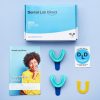
- At-home impression kit with custom-fit trays, pre-measured putty, and a prepaid USPS return label
- Free photo review of your impressions before you mail them back, so we catch issues before fabrication starts
- 30-day adjustment warranty (free adjustment or remake if the device doesn’t fit on delivery) plus a 60-day warranty on breakage
- Phone and email support throughout the order
- Made in coordination with licensed dentists
What you don’t get at our pricing:
- In-office adjustment visits (we handle adjustments by mail or guide you through them on a call)
- The dentist’s diagnostic time on your specific case
- Insurance billed directly from us (many plans don’t reimburse lab-direct purchases without a dentist referral)
For complex cases, those in-office services are worth paying for. For straightforward cases, they’re often not.
Three tiers of partial dentures, side by side
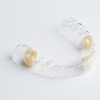
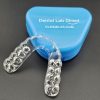
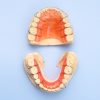
Browse our for per-product detail.
Does insurance cover partial dentures?
Most major dental plans cover partial dentures as a ‘major service.’ Typical terms [3]:
Coverage percentage: 40 to 60 percent after deductible. A $2,500 dentist-fitted partial against 50 percent coverage means you pay $1,250 out of pocket plus your deductible.
Annual maximum: $1,000 to $2,000. Coverage caps at the annual maximum. A $3,000 partial against a $1,500 cap means you pay $1,500+ regardless of the percentage covered.
Waiting period: 6 to 12 months for major services. Many plans won’t cover a partial during the first half-year of a new policy.
Medicare doesn’t cover dentures. Medicare Part B explicitly excludes routine dental care, including dentures [4]. Some Medicare Advantage plans include limited dental benefits. Check your specific plan.
Medicaid coverage varies by state. Some states cover partial dentures for adult Medicaid recipients; many don’t. Check your state’s Medicaid dental schedule.
ADA codes used for insurance billing: D5211 (maxillary resin base partial), D5212 (mandibular resin base partial), D5213 (maxillary cast metal partial), D5214 (mandibular cast metal partial) [5]. The dentist office submits these codes. Lab-direct sellers typically don’t bill insurance directly.
HSA / FSA funds. Lab-direct purchases often qualify for HSA or FSA reimbursement. Save your receipt and check with your plan administrator.
A note on lab-direct purchases and insurance. Some lab-direct sellers (us included) don’t bill insurance directly, but many partial dentures qualify as out-of-network ‘major services,’ which means your plan may reimburse you after you submit a receipt. We can provide documentation that supports your reimbursement claim. HSA and FSA funds typically apply directly at checkout.
Financing without insurance
Even without insurance, partial dentures can be financed:
Pay-in-4 (Klarna, Partial.ly, Afterpay). Lab-direct sellers commonly offer multiple options. We offer all three, interest-free, no credit check. Our partials run from four payments of $74.75 (Essix retainer at $299 total) to $137.25 (flexible partial at $549 total).
CareCredit and similar dental financing. 6 to 24 month no-interest if paid in full within the promotional period. Available at most dentist offices and at some lab-direct sellers.
Dental school clinics. Supervised students make partials at 20 to 40 percent below office pricing. Longer turnaround and multiple visits, but real savings if you’re flexible on timing.
Community health centers (FQHCs). Sliding-scale fees based on income. Available in most US counties.
The honest carve-out: financing turns a one-time cost into a monthly cost. Make sure the monthly fits your budget before signing.
What to do next, based on your situation
Five common situations. Pick the one that fits you.
- Budget is tight and you need a partial denture soon. Lab-direct DTC is the best price-to-quality tier. Our acrylic partial at $449 or Essix retainer at $299 hits the lowest cost point that still meets fabrication quality standards. Boil-and-bite kits are fine only for temporary placement.
- You have dental insurance with strong coverage. Run the math both ways. A $2,500 in-office partial with 60 percent coverage leaves you paying $1,000 out of pocket plus deductible. A $549 lab-direct partial paid out of pocket leaves you paying $549. Lab-direct often still wins on net cost even when insurance is involved.
- You have a complex case (multiple missing teeth, severe periodontal disease, planned implants, monomer allergy). Dentist-fitted is the right tier. The clinical time and adjustment visits are the value, not the device itself. Don’t optimize for sticker price on a case where the office services do real work.
- You’ve been quoted $4,000+ at a single dentist office for a simple partial. Get a second quote. Lab-direct or denture-chain pricing should be a fraction. If your case really is complex, the higher price is justified. A second opinion costs you nothing and could save you thousands.
- You’re paying out of pocket and want the cheapest custom option. Our Essix retainer partial at $299 or Nesbit at $399. Both are lab-fabricated from custom impressions. Below the typical range floor, with the same material grade you’d find at the office.
Still mapping your situation to one of these five?
If your case sits between scenarios or if you have a quote you want to sanity-check, our team can walk through the cost math with you. We’ve audited thousands of partial denture quotes over 25 years. Sometimes the answer is ‘yes, the dentist’s price is justified for your case.’ Sometimes it’s ‘you’re paying $3,000 for what should cost $600.’ Reach us at 1-888-591-2220 or via the .
FAQ
- How much do partial dentures cost without insurance?
Without insurance, partial dentures cost $300 to $5,000+ per arch. Most people pay $800 to $2,500 through a dentist office. Lab-direct sellers start at $299 and stay below the typical range. Your exact out-of-pocket cost depends on material, complexity, and channel.
- Is a $500 partial denture as good as a $3,000 one?
The lab-fabricated device usually is. The same materials and process produce a partial whether it ships through an office or direct. The $2,500 difference goes to office overhead (chair time, rent, staff, marketing) and the dentist’s clinical time. For straightforward cases, the device quality is identical. For complex cases, the dentist’s time adds value the device alone doesn’t.
- How much do partial dentures cost for just one tooth?
Single-tooth partials (Nesbit unilateral, flipper) typically cost $300 to $700 at the lab-direct tier and $800 to $1,500 at a dentist office. Our Nesbit flexible partial starts at $399.
- Does Medicare cover partial dentures?
Medicare Part B doesn’t cover routine dental, including partial dentures [4]. Some Medicare Advantage plans (Part C) include limited dental benefits and may partially cover partials. Check your plan. If your only coverage is Medicare Part B, you’ll pay out of pocket.
- Why does my dentist’s price differ so much from online prices?
Office overhead. The lab that fabricates the device is often the same across channels. The dentist office adds chair time, clinical staff, rent, equipment, and office management on top of the lab cost. Lab-direct sellers skip those layers. The price gap reflects the overhead difference, not necessarily a quality difference in the device itself.
- How long should a partial denture last to make the cost worth it?
A quality lab-fabricated partial denture should last 5 to 8 years before relining or replacement [2]. Cast cobalt-chromium framework partials can last 10+ years. At our pricing ($299 to $549), the cost-per-year for a 5-year lifespan is $60 to $110. At dentist-office pricing ($1,500 to $4,000), the cost-per-year is $300 to $800. Material grade matters more than channel for the long-term cost math.
25+ years as a . Professional-grade FDA-approved materials. Custom-made at our US dental lab. Made in coordination with licensed dentists. 1,000+ verified reviews. 60-day warranty on all custom-made products.
If you’re ready for a partial denture that costs less than the typical range
Order online. Your at-home impression kit ships in days with custom-fit trays, pre-measured putty, step-by-step instructions, and a prepaid USPS return label. Submit a photo of your impressions for free review before you send them back. The custom partial denture is then crafted at our US dental lab over 3 to 4 weeks. Every order includes a 30-day adjustment warranty (free adjustment or free remake if the device doesn’t fit on delivery) and a 60-day warranty on breakage (covering cracks, fractures, or denture tooth loss).
Real cost. Real device. Real lab.
Sources
[1] American Dental Association. 2022 Survey of Dental Fees (final edition; the survey was discontinued in 2023). National average fees for prosthodontic procedures, including ADA codes D5211-D5214 (resin and cast metal partial dentures).
[2] ISO 20795-1:2013. Dentistry, Base polymers, Part 1: Denture base polymers. International standard specifying mechanical, biological, and processing requirements for PMMA denture base materials.
[3] National Association of Dental Plans (NADP). Dental benefits coverage data including typical coverage percentages, annual maximums, and waiting periods for major services.
[4] Centers for Medicare and Medicaid Services (CMS). Medicare coverage of dental services. Medicare.gov policy excluding routine dental from Part B coverage.
[5] American Dental Association. Current Dental Terminology (CDT) codes: D5211, D5212, D5213, D5214. Reference for insurance billing.