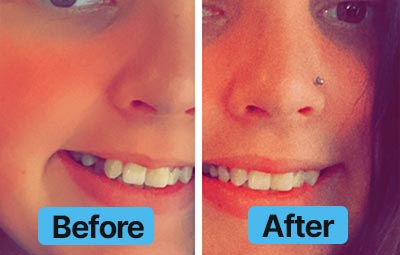
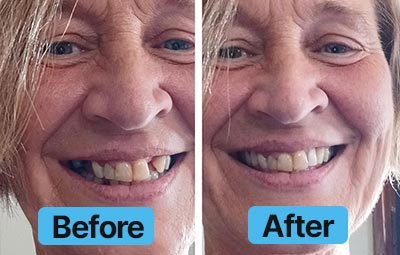
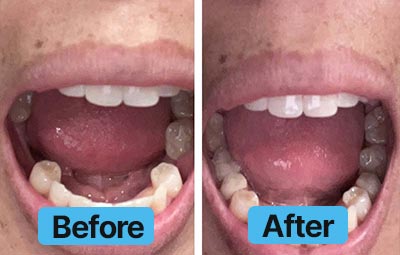
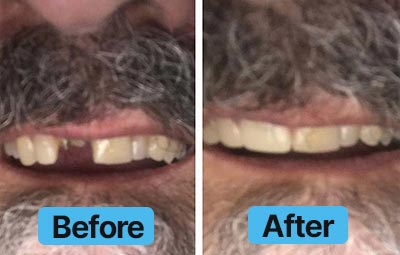
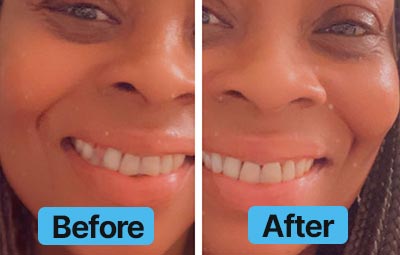
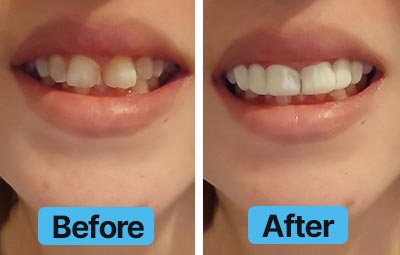
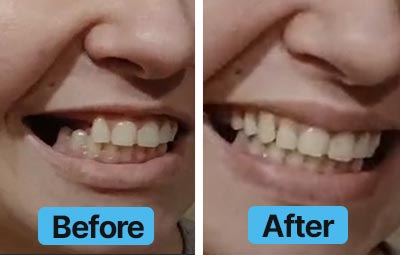
The “No-Drill” Demand
You’ve been scrolling through Instagram again. Another celebrity posts their “smile transformation” and you’re sitting there thinking about your own teeth—the gap you’ve hated since middle school, the discoloration that doesn’t budge no matter how many whitening strips you try, the way your smile just feels… small.
Then you see it. A TikTok video of someone’s teeth being filed down to tiny nubs before veneers. The caption says “traditional veneers” and suddenly you’re terrified. You want the transformation, sure. But you’re not destroying healthy teeth to get it.
So you start Googling. “No-prep veneers.” “Veneers without drilling.” “Lumineers.” “Snap-on veneers.” The results flood in, each claiming to be the perfect solution. But here’s what you’re quickly discovering: cosmetic dentistry isn’t one-size-fits-all. What works for your favorite influencer might not work for your mouth. And the “no-prep” buzzword you keep seeing? It actually refers to different solutions that solve different problems.
Some options bond permanently to your teeth. Others you can remove at night like a retainer. Understanding which one matches your situation—your anatomy, your budget, your goals—matters more than any before-and-after photo you’ve seen online.
No-Prep Veneers: The “Permanent” Solution
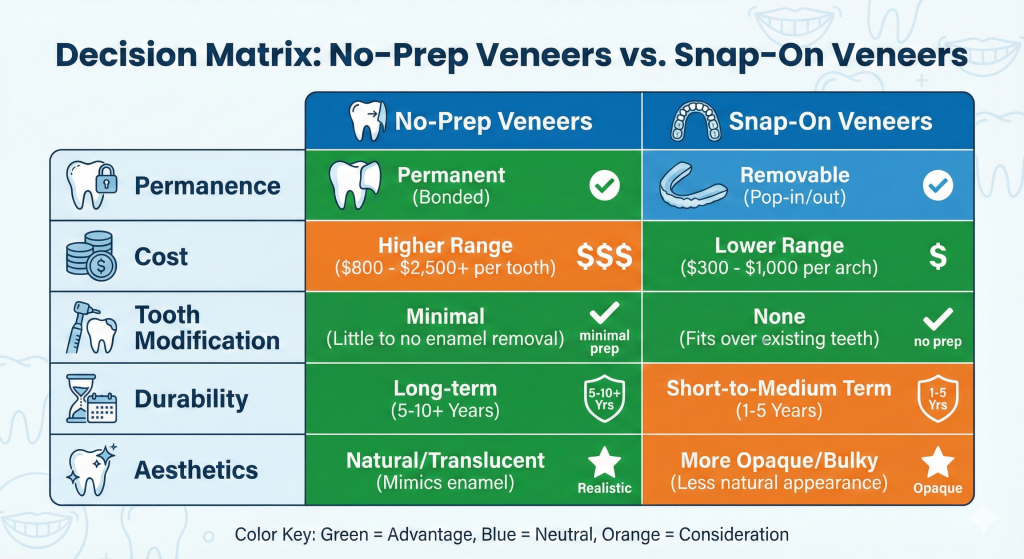
Let’s start with what no-prep veneers actually are. You’re looking at ultra-thin porcelain shells, typically 0.2mm to 0.3mm thick. For context, that’s about the thickness of a contact lens. Traditional veneers require your dentist to shave down your enamel—sometimes removing half a millimeter or more—to make room for the porcelain. No-prep veneers skip that step entirely. They bond directly to your existing enamel without drilling anything away.
The technology has gotten sophisticated enough that these thin shells can look natural and last for years. But they only work if your teeth have the right starting conditions.
Are you actually a candidate?
You have naturally small teeth. If you’ve always felt your smile looks too petite for your face, no-prep veneers can add dimension without requiring any tooth reduction.
You have gaps or spacing. Those spaces create natural room for porcelain without making your teeth look bulky or protrusive.
Your teeth sit back from where they should. Some people have teeth that naturally tilt inward (dentists call this “lingually inclined”). No-prep veneers can bring them forward into better alignment.
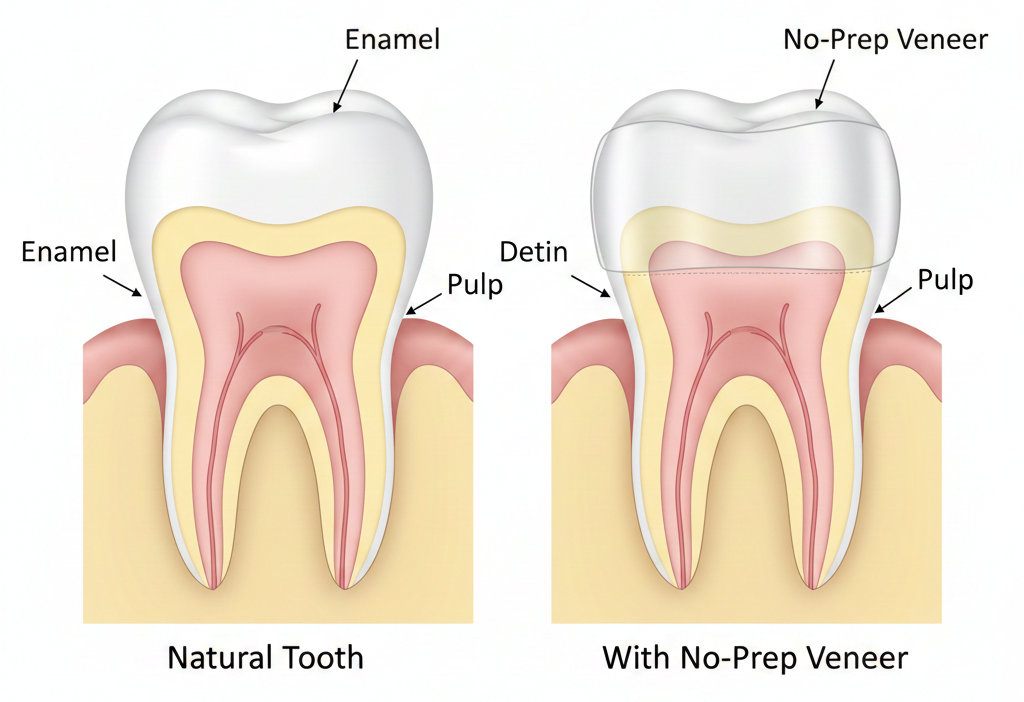
The advantages are real. You’re keeping all your natural enamel intact. No needles in most cases. No temporary veneers that might pop off while you’re waiting for your permanent ones to come back from the lab. And because the porcelain is bonded in one final visit, you’re not dealing with multiple appointments where your teeth feel vulnerable.
But there are limitations you need to know about.
No-prep veneers can look bulky if they’re not done right. The way the veneer transitions from your gumline matters enormously. If your dentist’s lab technician isn’t highly skilled, you could end up with teeth that look like Chiclets—too thick, too square, unnaturally uniform.
They can’t hide severe discoloration. Because no-prep veneers are so thin, they’re somewhat translucent. If you have dark tetracycline staining or heavily discolored teeth, that darkness will show through. You’d need thicker porcelain with more opacity, which means you’re back to doing some tooth preparation.
They require meticulous gum care. The margins (where the veneer meets your natural tooth) sit right at your gumline. If those edges are bulky or rough, you’re setting yourself up for inflammation and gum recession. You’ll need to be diligent about flossing and cleaning around them.
And here’s the honest part: no-prep veneers typically cost $1,000 to $2,500 per tooth. If you’re transforming your whole smile (usually eight to ten teeth), you’re looking at an investment comparable to buying a used car.
When No-Prep Isn’t an Option
So what happens if you want veneers but you hit one of these roadblocks?
You can’t afford $10,000+ for a full smile. That’s not a moral failing. That’s just math.
You have active cavities or gum disease. Dentists won’t (or shouldn’t) veneer over compromised teeth.
You’re missing a tooth. Veneers enhance existing teeth. They don’t replace missing ones.
This is where you might encounter snap-on veneers as an alternative. And before you dismiss them as “fake” or “cheap,” understand what they actually are. They’re not a downgrade from no-prep veneers. They’re a different category entirely that solves different problems.
Some people call them a “smile test drive.” You get to see what your face looks like with a transformed smile before committing to anything permanent. Others use them functionally for specific occasions—weddings, job interviews, family reunions where everyone’s taking photos.
The “Accessory” Solution: Snap-On Veneers
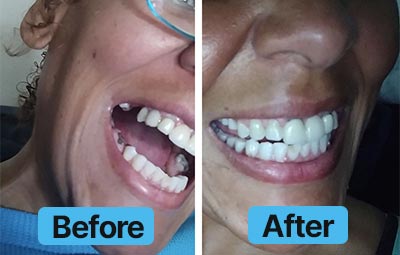
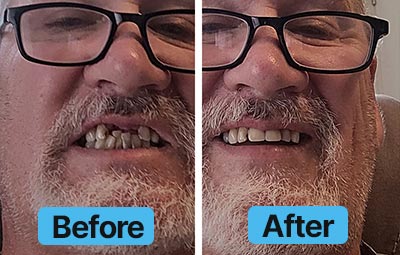
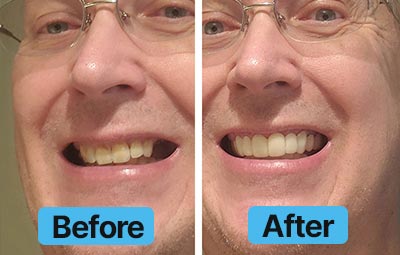
Snap-on veneers are removable appliances that fit over your existing teeth. Think of them like contact lenses for your smile, or jewelry you can take on and off. You’re not bonding anything permanently. You’re creating a cosmetic cover that clips into place.
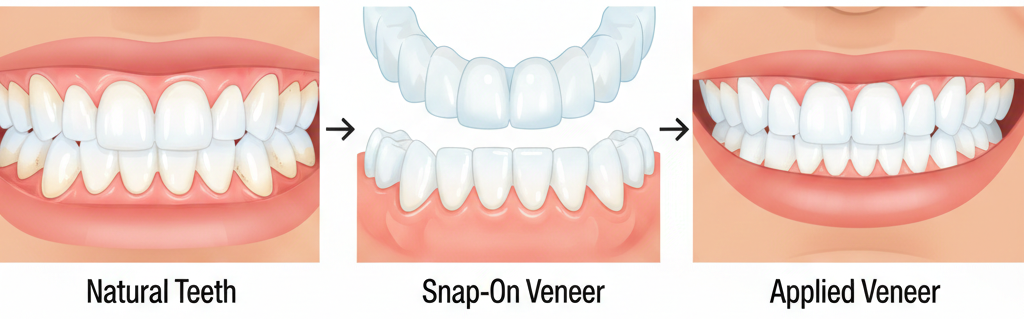
There’s a huge difference between professional lab-made options (like snap on veneers) and the DIY kits you see advertised on late-night TV or sketchy websites. Professional versions are custom-made from impressions of your teeth. They’re designed to fit your specific arch shape, bite, and gum contours. The internet kits are boil-and-bite disasters that can damage your teeth and gums.
When do snap-on veneers actually make sense?
You’re working with a tight budget. For the cost of a single porcelain veneer, you can get a full-arch snap-on that transforms your entire smile. If you’ve got $1,500 instead of $15,000, this becomes a viable option.
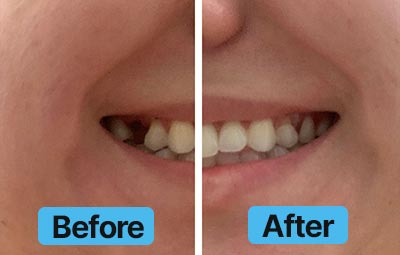
You’re missing a tooth and not ready for an implant. Maybe you lost a lateral incisor years ago and you’re not a candidate for surgery, or you can’t afford an implant right now. A snap-on veneer can fill that space visually without drilling into adjacent teeth for a traditional bridge.
You’re testing the waters. Some people need to wear a different smile for months before they’re ready to commit to permanent changes. Dental anxiety is real. If the thought of someone permanently altering your teeth triggers panic, a removable option gives you control.
You need something for specific occasions. Maybe you don’t care about your smile 95% of the time, but you’ve got a big presentation coming up or you’re in a wedding party. Snap-ons let you transform for those moments without daily commitment.
Making Your Decision: A Practical Guide
Here’s how to think through your specific situation:
If you’re thinking: “I absolutely don’t want my teeth drilled or altered.”
Consider: No-prep veneers (if your anatomy qualifies) or snap-on veneers.
If you’re thinking: “I have around $1,500 to spend total.”
Consider: Snap-on veneers for a full arch, or maybe one or two no-prep veneers on just your front teeth.
If you’re thinking: “I want to eat normally without worrying about breaking anything.”
Consider: No-prep veneers (or traditional veneers if your dentist recommends minimal prep). Normal Snap-ons won’t handle aggressive biting forces. However, Dental Lab Direct has a Premium snap-on veneer option that is made of a much stronger crystalized resin.
If you’re thinking: “I’m missing a tooth and I need to fill that gap.”
Consider: Snap-on veneers as a cosmetic solution, or start planning for an implant with traditional veneers later.
If you’re thinking: “I want this to look completely natural and indistinguishable from real teeth.”
Consider: No-prep veneers with a dentist who uses a lab specializing in translucency and natural characterization.
If you’re thinking: “I need something next month for my wedding, but I’m not ready for permanent changes.”
Consider: Snap-on veneers as a temporary solution while you save and plan for permanent work.
The goal isn’t to pick the “best” option in absolute terms. The goal is to match your clinical reality, financial situation, and psychological readiness to the appropriate solution.
Moving Forward: What Actually Matters
Both no-prep and snap-on veneers have legitimate places in cosmetic dentistry. Your job is to look past the marketing hype and Instagram panic to figure out what makes sense for your mouth.
Look at before-and-afters that match your specific concerns, not just generically beautiful smiles.
Your smile transformation doesn’t have to mean irreversible damage to healthy teeth. You’ve got options. Pick the one that lets you sleep at night: Bellaveneers